The Cost of Softness: What a Decade of Shawn Mendes Sexuality Speculation Actually Says
- Conner Tighe
- Jul 10
- 4 min read

By Conner Tighe
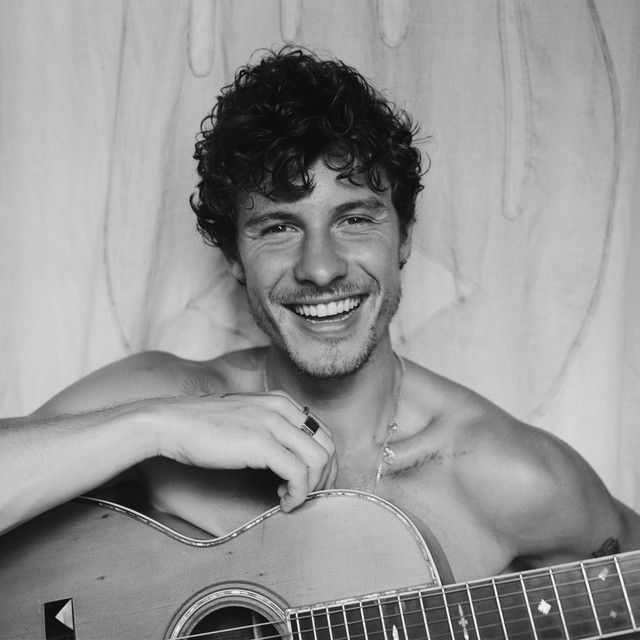
There's a version of this piece that tries to answer a question that was never mine, or anyone else's, to answer. This isn't that piece. Shawn Mendes' sexuality is his own business, and he's said as much himself, more than once, more patiently than he probably owed anyone. What interests me isn't the answer. It's the question — why Shawn Mendes' sexuality speculation got attached to him so early, so relentlessly, and what it says about the kind of man pop music has historically allowed its stars to be.
Mendes was seventeen the first time he had to publicly deny being gay. Not because he'd said anything about his sexuality, but because commenters on YouTube had decided his "vibe" gave something away. He got on Snapchat and shut it down, denying the rumor and adding, almost as an afterthought, that it shouldn't matter either way — then went back to being a teenager with a guitar and a record deal, presumably assuming that would be the end of it.
It wasn't. It became a low hum that followed him for the next decade, resurfacing every few years with a fresh wave of TikTok theorizing or a tabloid headline dressed up as a question. By 2018, he was telling Rolling Stone that he sometimes felt pressure to be photographed with a woman just to put the rumors to rest — an admission that says less about Mendes and more about how thoroughly the speculation had gotten under his skin.
And then, in October 2024, something shifted. At a concert in Colorado, mid-set, he stopped and just talked to the crowd about it. He said the constant chatter about his sexuality had followed him since before he was even legally an adult. He called it an intrusion on something he was still, honestly, figuring out for himself. He didn't offer a label. He didn't perform certainty for an audience that had spent ten years demanding it. He just said the quiet, uncomfortable true thing: that he didn't fully know, that not knowing is normal, and that living in a culture obsessed with tidy categories makes that uncertainty feel a lot scarier than it should.
That moment is the real story here, more than any theory about who Shawn Mendes is or isn't attracted to. A twenty-six-year-old man stood in front of thousands of people and admitted to not having a finished answer about himself — and framed that as okay. That's not nothing. Most men, famous or not, are taught that uncertainty about identity is a weakness to hide, not a truth to hand a crowd like a gift.
Which is what makes the original speculation so telling. Go back and look at what actually triggered it. Not a tabloid scoop, not a leaked relationship — a vibe. Mendes came up in an industry that wanted its male pop stars to be a very specific kind of masculine: charming but not soft, romantic but never vulnerable in a way that couldn't be sold back to teenage girls as sensitivity-as-marketing. He was expressive. He wrote earnest songs about anxiety. He was close with male friends in ways that got dissected frame by frame online. None of that is evidence of anything except that he was a teenager who didn't perform hardness particularly well. And for over a decade, the internet treated that as a clue to be solved rather than just a personality to be left alone.
He's not the only one. Kit Connor was eighteen when the same pressure — fueled by the exact demand for legibility — pushed him into publicly coming out as bisexual after playing a queer character on Heartstopper, a decision he later said he resented having had forced on him. Billie Eilish went through her own version of it, accused of "queerbaiting" after a music video read to some fans as more than aesthetic ambiguity. Different genders, different genres, same underlying mechanism: an audience that has decided ambiguity is a debt owed to them, and that any artist who doesn't resolve it clearly enough is either hiding something or selling something.
What's specific to Mendes, though, is the male pop star angle — because the traits that got him flagged aren't traits men in his position are typically praised for. Vulnerability in a male pop star gets read one of two ways: either as a savvy emotional-availability brand, cynically deployed, or as evidence of a secret. There's rarely a third option where a man is just... soft, and that's simply who he is, with no further meaning required. Mendes spent years, by his own account, feeling like he had to overcorrect toward visible heterosexuality just to buy himself room to be gentle in public.
That's the cost. Not the speculation itself, exactly, but what it demands in return: a decade of a young man calibrating how much of himself he's allowed to show before it gets misread as a confession. He said as much in 2024, more or less — that the rumors had intruded on something he hadn't even had the space to figure out privately, because he'd been famous since he was a teenager and never got the ordinary years most people get to sort that stuff out quietly.
Maybe the more useful question, going forward, isn't whether Shawn Mendes is figuring out his sexuality. It's why we built a culture where a young man can't be tender in public without an audience deciding it needs an explanation. He answered the question he was actually asked, on his own terms, at his own pace, in front of a crowd that had spent ten years asking a different one. That's the part worth sitting with.


Comments