Stephen Sanchez's Turn Toward Sincerity
- Conner Tighe
- 4 minutes ago
- 3 min read

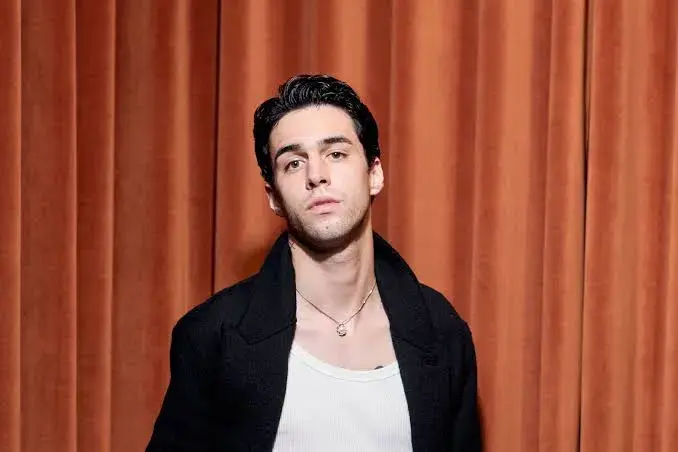
By Conner Tighe
There is a particular kind of twenty-year-old who, handed a billion streams and a hit song about heartbreak, decides the correct response is to invent a fictional murder. Stephen Sanchez is that twenty-year-old. In 2023, on the heels of "Until I Found You" turning into one of the great unlikely crossover hits of the decade, he did not do a victory lap. He built a character: a doo-wop troubadour haunting the boardwalks of 1958, falling for a mob boss's girlfriend named Evangeline, and dying for it by the record's end. He called the album Angel Face, and he sang the whole thing in a voice pitched somewhere between Roy Orbison and a ghost.
It was a strange, almost defensive move. Sudden fame tends to invite artists to perform themselves more loudly. Sanchez responded by performing someone else entirely, a fictional alter ego, a fictional love, a fictional death, three layers of distance stacked between him and a room full of people who wanted to know who he actually was.
Three years later, on Love, Love, Love, he finally takes the costume off.
Stephen Sanchez and the Sound of Getting Sincere
The new album, out since May on Mercury Records and produced largely by Oscar Görres alongside Mattman & Robin, does not open with menace or melodrama. It opens with Sanchez admitting, plainly, that he used to think he was too small for love and has spent the years since finding out otherwise. That kind of directness would have been unthinkable on Angel Face, where every feeling had to be smuggled in through period costume. Here it's the whole premise. Sanchez has described the record as coming from a stretch of his life when love was everything he wanted to be and, by his own account, everything he sometimes failed to be. It's the sound of a young man deciding that his real story might be worth as much as his invented one.
Sonically, that shift in honesty comes with a shift in genre. Angel Face borrowed its DNA from '50s and '60s rock and roll, all reverb and doomed romanticism. Love, Love, Love reaches instead for Motown, all horns, handclaps, and vocal harmonies stacked like a choir. "It Might Be Love" and the title track arrive as full soul revues. "Home to Mother" has the giddy, technicolor rush of a man introducing his fiancée to his family and meaning every word of it, which, as it happens, he was: Sanchez wrote much of this album around his engagement to musician Devi Tuil, and their shared happiness runs through the record like a current under the floor.
Where It Wobbles
No feature is honest if it pretends the record is flawless, and Love, Love, Love has a soft middle. "Already Got Me," "Ooo Baby (I Love You)," and "Dance Away the Music" arrive in a row and threaten to blur together, three songs so devoted to replicating a vintage Motown formula that they occasionally forget to sound like anyone specific. "Ooo Baby" is barely more than its own chorus on a loop, two minutes of a single idea that never quite develops past its opening line. It's the sound of homage outpacing personality, which is a strange note to hit on the one album where Sanchez was supposedly done hiding behind other eras.
But then there's "You Are So Beautiful," the closer, which earns back everything the middle stretch loses. It doesn't sound like an impression of 1966. It sounds like a man who has spent an entire album building up the nerve to just say the thing directly, and finally does.
A Kid Who Used To Play Dress-Up
Sanchez is out on the road right now behind all of this, the Sing Love Again Tour, which launched in Paris this spring and has since worked its way through Europe with stops across North America and Australia still ahead. It's worth sitting with the fact that he's singing these plain, unguarded songs to audiences who first fell for him as a fictional dead troubadour from 1958. That's the real tension of Love, Love, Love, not whether the horn arrangements land, but whether a fanbase built on mythology will follow an artist who has decided he'd rather just be known. Three years ago, Stephen Sanchez responded to fame by writing himself a funeral. This time, he wrote himself a wedding. It might be the braver record.



Comments